Independent researcher / Vancouver, 2026–27
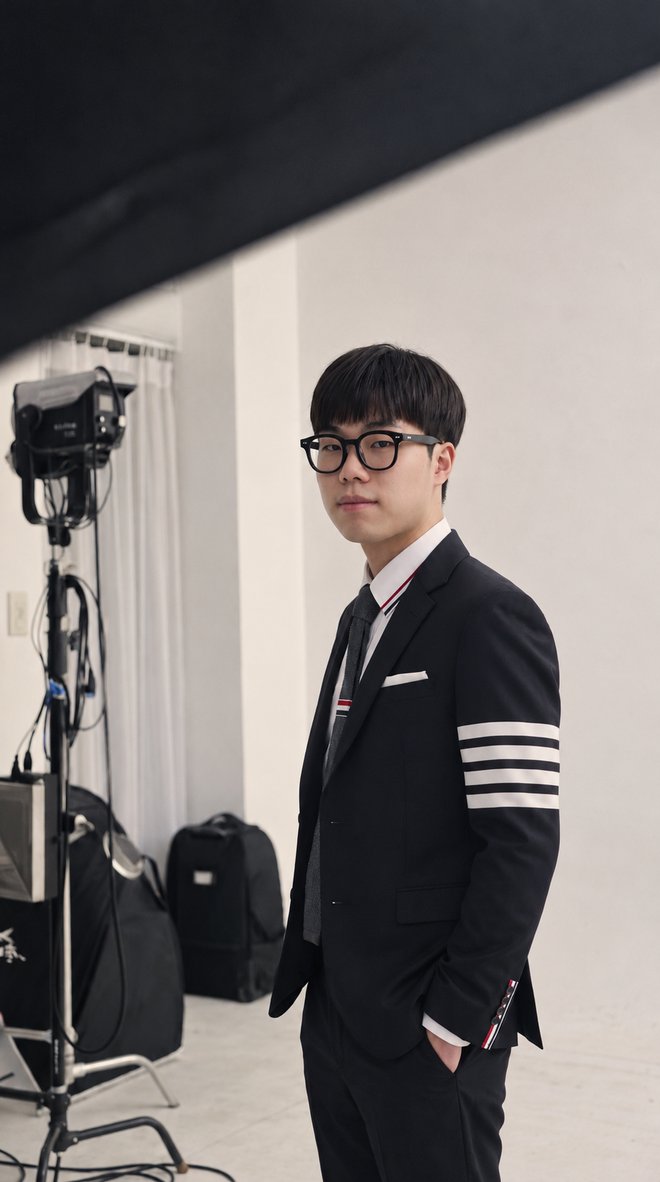
Sunjun Hwang
AI & quantum computing researcher
I work on making machine learning hold up outside the lab: adversarial robustness, federated learning across heterogeneous clients, and quantum machine learning, with applications in autonomous driving, wireless communication, and medical data.
- Publications
- 12+
- Active projects
- 9+
- Presentations
- 10+
- Awards
- 7+
About
I am an independent researcher working on artificial intelligence and quantum computing. I studied software and physics at Yonsei University, where I was an undergraduate researcher at the RAISE Lab.
Research direction. Making AI systems robust and reliable, from quantum-enhanced machine learning to safety-critical applications in autonomous driving and semiconductor design.
Questions I care about. How do we build AI that doesn't break under uncertainty? Where can quantum computing do what classical methods can't?
Next. Graduate research at the intersection of quantum computing and trustworthy AI, connecting theory with real-world deployment.
"When something is important enough, you do it even if the odds are not in your favor."
Elon Musk
Research
- Quantum computing Quantum algorithms and hybrid quantum-classical systems for real-world applications.
- Artificial intelligence Deep learning, federated learning, and adversarial robustness in neural networks.
- Autonomous vehicles Simulation and development of autonomous driving systems using CARLA and reinforcement learning.
- AI security Adversarial attacks, defense mechanisms, and robustness analysis for AI systems.
- TDA for medical data Topological data analysis of BRCA breast cancer genomic data to find biomarkers and hidden topological structure.
- Computer systems Compilers, computer architecture, operating systems, and databases, and how they interact in modern AI workloads.
- Robotics Motion planning, manipulation, and sim-to-real transfer for robots that act in the physical world.
News
CI-FL: Cache-Inspired Federated Learning — Communication Reduction via Selective Update Forwarding
Accepted to TrustFL-SIS 2026, co-located with IEEE ICDM 2026
Simple Pseudobulk Outperforms Topological and Quantum-Geometric Readouts of Single-Nucleus Chromatin and Transcriptomes for Donor-Level Alzheimer's Classification: A Rigorous Benchmark in a Powered Multiome Cohort
Accepted to CKAIA 2026 · Poster
H2C: A Pan-Cancer Gene Panel Discovered via Persistent Homology in Topological Autoencoder Latent Space
Accepted to IEEE COINS 2026
AdaFed: Adaptive Selective Aggregation for Heterogeneous Federated Learning in Autonomous Driving
Accepted to ICUFN 2026 · Published in IEEE Xplore
Accepted to ICAIIC IEEE 2026
Design and Implementation of an FPGA-Based Real-Time Voice Risk Detection System
Accepted to KCS 2026
Quantum Noise-based Adversarial Attack on Diffusion Models and Analysis of Defense Mechanisms
Accepted to KIIT-JICS 2026
Logit-based Knowledge Distillation for Heterogeneous Medical Image Federated Learning
Accepted to KIIT Conference
Classification of Pneumonia in Chest X-rays Using a Hybrid Neural Network Based on a 3-Qubit Quantum Circuit
Accepted to KSLI Conference
Performance Comparison of Deep Learning Models for Seismic Signal Denoising
Accepted to KIIT Conference
Contact
Get in touch about quantum computing, computer vision, deep learning, or web programming.
Supported by Yonsei University, RAISE Lab
Supported by ILSC Language Schools, Vancouver
Where I am
Drag to rotate · scroll to zoom
Vancouver, Canada
Since September 2026 I have been based in downtown Vancouver, studying at ILSC Vancouver while continuing my research collaborations remotely.